Background : design and benefits of custom shell and tube heat exchangers
Shell and tube heat exchangers are widely used across many industries to reduce heat losses, optimize thermal reactions, and heat or cool fluids. For an introduction to how they work, please refer to our dedicated article.
In this article, we explain the value of custom heat exchangers like those manufactured by SAG: they ensure optimal thermal efficiency for your process while demonstrating advanced expertise in the design and fabrication of pressure equipment. You will find here all the technical and design considerations involved.
What this article covers
- The design parameters that define a custom shell and tube heat exchanger: process conditions, space constraints, fouling, flow regimes, and customer specifications.
- The construction codes used by SAG: ASME VIII, EN 13445, CODAP, and the TEMA standard.
- Available materials: carbon and stainless steels, titanium, nickel alloys, copper-nickel, clad solutions, and PVDF.
- Possible configurations: straight tubes, U-tube bundles, floating head, multiple passes, horizontal or vertical mounting, etc.
- Optimization internals: baffles, turbulators, filters, demisters, etc.
- Concrete examples of configurations based on process constraints.
Content Table
1) Designing a shell and tube heat exchanger: the key parameters
Every custom heat exchanger is designed to fit the customer’s process, not the other way around. To achieve this, several parameters are analyzed and integrated from the very first design stages. Here are the main ones.
1.1. Process conditions (process data)
The first step is to understand the fluids entering and leaving on both the shell side and the tube side.
- Inlet and outlet temperatures: they determine the thermal gradient to be applied. The higher the gradient, the greater the heat transfer potential, but also the higher the risk of thermal expansion and mechanical fatigue.
- Flow rates (mass or volume): they directly influence the heat transfer surface required. A high flow rate will require more tubes, or a higher flow velocity.
- Operating pressures: they impact wall thickness, material selection, and mechanical sizing, particularly for the shell.
Type of fluid: gas or liquid, viscous or not, dirty, corrosive, gel-forming… These characteristics influence material selection, flow arrangement, and ease of cleaning.
Example of a process condition
A highly viscous fluid such as a pharmaceutical syrup requires lower velocities to avoid excessive pressure drop, as well as a design that facilitates CIP (clean-in-place) cleaning.
1.2. Space constraints at the operating site
Even with the best performance based on process conditions, a heat exchanger is useless if it cannot be integrated into the customer’s process. Its footprint is therefore a key parameter to consider during thermal sizing.
Some customers impose limits on length, height, or weight. This calls for trade-offs: a U-tube bundle instead of straight tubes, vertical instead of horizontal mounting, or several smaller exchangers in parallel.
It may also involve integration into a process skid or a container, where everything must be compact and offer a degree of modularity.
Example
At SAG, we often design custom heat exchangers intended to be installed in tight spaces: in such cases, we work with multiple passes or unconventional tube arrangements.
1.3. The expected level of fouling or soiling
Some processes generate deposits or corrosion inside the heat exchanger. This is common in food, chemical, petrochemical, and certain heavy industry applications.
In these cases, a fouling factor must be incorporated into the surface area calculation. Cleaning methods must also be anticipated: mechanical (removable bundle, manholes, etc.) or chemical (CIP/SIP). This may influence the choice of a removable tube bundle, cleaning plugs, or even tubes with a smooth/polished surface finish.
1.4. Flow direction and flow regimes
The design also depends on the direction in which fluids circulate:
- Co-current, counter-current, cross-flow: each configuration has its own thermal advantages.
- The goal is generally to strike the best compromise between heat transfer and pressure drop. Excessive pressure drop means more powerful pumps are required, which translates into higher operating costs.
- A good design anticipates these trade-offs while ensuring a turbulent flow regime, which is generally preferable for improving heat transfer.
1.5. Customer specifications and internal standards
Finally, some customers impose additional requirements:
- Prohibited or mandatory materials (often in pharma or food applications);
- Internal standards;
- Testing or documentation requirements (e.g. 100% radiography, dual PED/ASME certification, etc.).
The thermal engineer’s role is therefore to combine process requirements, site constraints, and customer expectations to deliver an exchanger that is high-performing, durable, and compliant.
At SAG Industries, the sizing of heat exchangers relies on professional tools widely recognized in the industry. Thermal and mechanical calculations are carried out using Aspen Exchanger Design & Rating (EDR), while 3D models and manufacturing drawings are generated with a dedicated CAD software (Inventor) and mechanically verified using AutoPIPE Vessel, particularly for pressure, thermal expansion, and load-combination analysis. This digital workflow guarantees designs that are accurate, traceable, and compliant with applicable codes.
2) Construction codes, standards, and directives for heat exchangers: ASME, EN 13445, TEMA, and the PED directive
Sizing a shell and tube heat exchanger is not based solely on thermal and mechanical calculations. It must also comply with a set of design rules established by recognized construction codes that ensure the safety, reliability, and regulatory conformity of the equipment.
These codes define calculation methods, mechanical strength criteria, tolerances, required tests, and the documentation to be provided. The choice of code depends on the target market, the industry sector, the geographical location, or simply the customer’s specific requirements.
2.1. The main pressure construction codes used
Below are the construction codes most commonly used for shell and tube heat exchangers:
ASME VIII Division 1
USA and international
EN 13445
Europe
CODAP
France
AD-MERKBLÄTTER
Germany
The choice depends on the target market and the customer’s specific requirements. Some projects call for dual compliance, for example ASME and EN 13445 simultaneously.
2.2. The TEMA standard
TEMA (Tubular Exchanger Manufacturers Association) is a design standard specific to shell and tube heat exchangers. It classifies exchangers by type (TEMA R, C, B, etc.), defines standard dimensions and end types, and provides recommendations on maintenance and mechanical performance. TEMA is used in conjunction with a pressure code (ASME or other).
2.3. The PED directive
The PED (Pressure Equipment Directive, 2014/68/EU) is the European regulatory framework for placing pressure equipment on the market. It sets out essential safety requirements and mandates CE marking. Codes such as EN 13445 are precisely the tools used to demonstrate compliance with the PED.
2.4. Specific features and implications
Each code has its own calculation methods, some more conservative than others. For equivalent thermal performance, an exchanger calculated according to ASME may differ from one designed to EN 13445, both in shell thickness and in geometry.
Non-destructive testing (NDT) requirements also vary: weld radiography, dye penetrant testing, hydrostatic testing, helium leak testing, and so on.
Some customers or industries also require dual compliance (for example ASME + PED) or internal standards equivalent to a reinforced code.
2.5. Flexibility in heat exchangers design at SAG
At SAG, every heat exchanger is designed in accordance with the codes specified by the customer, with full documentary traceability validated by Notified Bodies (NoBo) such as Apragaz. The engineering department masters the main international codes, which makes it possible to address both local and international demands across all types of industries: chemicals, energy, nuclear, hydrogen, food and beverage, pharma, oil & gas, and more.
Backed by tens of thousands of heat exchangers manufactured since 1958, SAG capitalizes on its technical know-how and stands as a key player in the design and fabrication of process equipment.

Backed by tens of thousands of heat exchangers manufactured since 1958, SAG capitalizes on its technical know-how and stands as a key player in the design and fabrication of process equipment.
Jean-Maurice Hannard
Business Unit Manager
3) Materials for shell and tube heat exchangers: selection and criteria
Material selection is a critical step, as it determines the durability, corrosion resistance, chemical compatibility, and mechanical strength of the exchanger.
At SAG, materials are selected based on service conditions: nature of the fluids, temperatures, pressures, chemical aggressiveness, fouling risks, and regulatory requirements.
3.1. Materials used
- Carbon steel : P265GH, P355NL, SA516 Gr60, etc.
- Stainless steels : 316L, 321, 321H, 254 SMO, etc.
- Titanium : Grade 2, Grade 12, etc.
- Aluminum : Al1050, Al1060, Al1070, etc.
- PVDF : used for specific applications requiring very high chemical resistance.
- Steel alloys : P5, P11, P22, 15Mo3, 16Mo3, etc.
- Nickel-based alloys : Incoloy, Hastelloy, Inconel, etc.
- Copper alloys and copper-nickel : C12200, C46400, C71500, etc.
Visit our materials page
Visit our dedicated page to learn more about materials used in bespoke tubular heat exchangers designs.
Click here3.2. Material selection criteria
Corrosion : the material must resist both internal corrosion (from process fluids) and external corrosion (atmosphere, environment).
Chemical compatibility : certain fluids interact strongly with specific metals.
Temperature and pressure : mechanical strength varies with the operating temperature and pressure.
Standards and codes : materials must be certified in accordance with applicable standards (3.1 certificates, etc.).
Welding and fabrication : this affects technical feasibility and costs.
Thanks to its in-house welding department, SAG can join a wide range of materials by drawing on an extensive library of existing WPS and PQR (welding procedure specifications and procedure qualification records), or by developing new tailor-made procedures, validated by Notified Bodies (NoBo) such as Apragaz.
4) Shell and tube heat exchanger configurations: bundles, baffles, and process optimization
On paper, a shell and tube heat exchanger may seem simple: one fluid flows through the tubes, another through the shell around them. In practice, with a custom-engineered exchanger, configuration possibilities are as varied as your processes require, and the choice of one architecture over another depends directly on the goals of the process, site constraints, and the nature of the fluids (see the first part of this article).
When you buy a heat exchanger from SAG Industries, before fabrication begins, ourobjective is to identify the optimal configuration in terms of thermal performance, maintainability, and overall cost.
4.1. Shell and bundle types
Below are some non-exhaustive examples that illustrate the range of possible configurations of heat exchanger you could buy :
- Straight tubes with fixed tubesheets
Simple to manufacture and install. Recommended when the temperature difference between the two fluids is limited. Less suitable for internal mechanical cleaning, since the bundle is fixed. - U-tube bundle
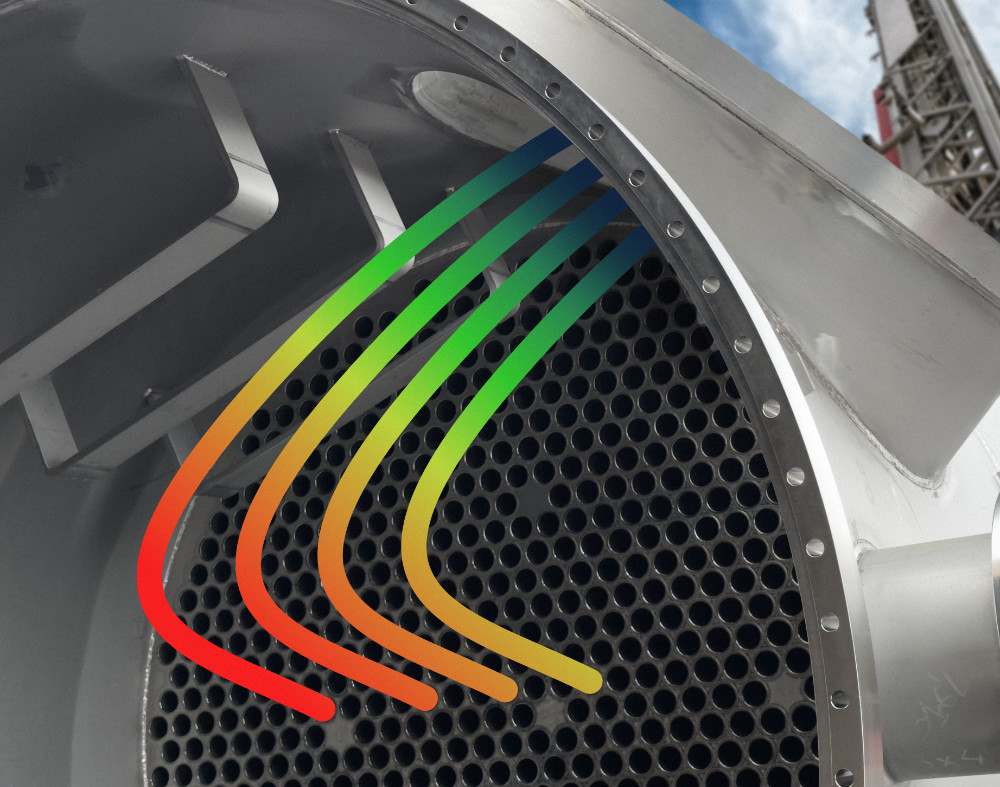
Very common in industry. This design absorbs significant thermal expansion without the need for compensators. The bundle is self-supporting on one side, which simplifies fabrication but limits internal tube inspection (mechanical cleaning is more challenging). - Removable bundle (« floating head » or « pull-through bundle »)
Suited to dirty or fouling-prone fluids. The bundle can be withdrawn for full cleaning or inspection. It requires more space and a higher budget but offers great maintenance flexibility. - Multi-pass tube arrangements
The tube-side flow is divided into several passes to increase velocity, improve heat transfer, or shorten the exchanger length. This is a way to optimize compactness, especially when space is limited. - Jacketed shells or annular shell designs
Used in specific cases, for example in laboratories or for small capacities, when the heat exchange has to be tightly controlled. This is not a common design for medium- or high-capacity industrial applications. - TEMA Type BEU
Shell with a U-tube bundle and a single bonnet on the tube side. - TEMA Type AES
Removable channel cover, one-pass shell, and floating rear head.
4.2. Orientation and positioning
Horizontal mounting: the most common option. Easy to integrate into a standard installation.
Vertical mounting: useful when floor space is limited, or to promote natural drainage of fluids (notably condensates or slurries). It is required in certain batch processes or compact skids, columns, etc.
4.3. Tailoring to customer-specific process needs
Configuration is not limited to fluid circulation. A shell and tube heat exchanger can be tailored down to the smallest details to match customer requirements and installation constraints — often in direct relation to the other equipment in the process :
- Inlets/outlets: vertical or horizontal orientation, types of flanges, specific connections, additional nozzles, etc.
- Lifting lugs: to facilitate handling on site or in the workshop.
- Supports: pads, saddles, brackets, anchored feet, depending on the layout.
- Maintenance access: manholes, inspection plugs, drain connections.
Specific interfaces : walkways, access platforms, sensor/instrument flanges, valves, etc.
4.4. Selection based on fluid type and cleaning requirements
The choice of fluid directly influences the exchanger design through its fouling factor, corrosivity, and thermal expansion coefficient.
A clean, non-corrosive fluid ?
A fixed bundle is often sufficient.
A viscous or dirty fluid ?
A removable bundle, or a design that facilitates circulation cleaning.
High thermal expansion ?
U-tube, expansion joints, or floating head designs.
4.5. A wide range of internals to optimize performance
The internals of a shell and tube heat exchanger are components placed inside the shell or the tubes to enhance performance or facilitate certain functions. They may seem secondary, but they play a key role in efficiency and maintenance. Some examples :

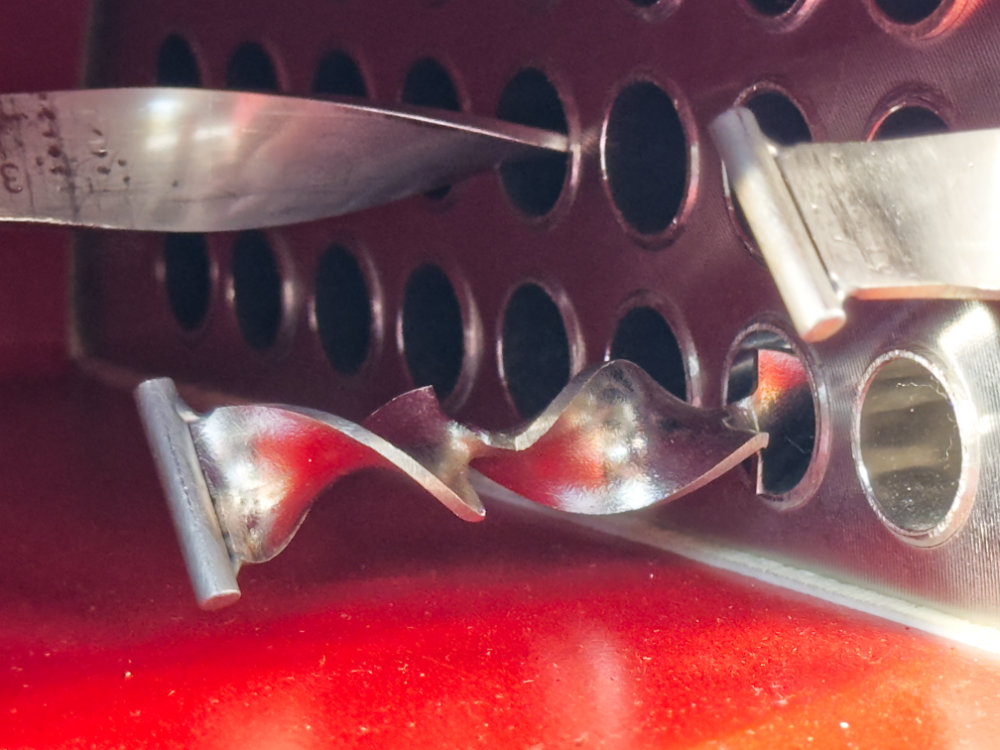
Tube turbulators
Small metallic inserts or specially designed shapes placed inside the tubes to increase fluid turbulence. They improve heat transfer by reducing the thermal boundary layer, without significantly increasing pressure drop.

Baffles
Placed inside the shell to direct the flow, increase velocity, and avoid stagnation or dead zones. They improve thermal performance and limit fouling.

Filters
Integrated into the exchanger, they retain solid impurities present in the fluids before they enter the tube bundle. They protect the internals against fouling or abrasion, ensure stable thermal performance, and extend the equipment's service life.
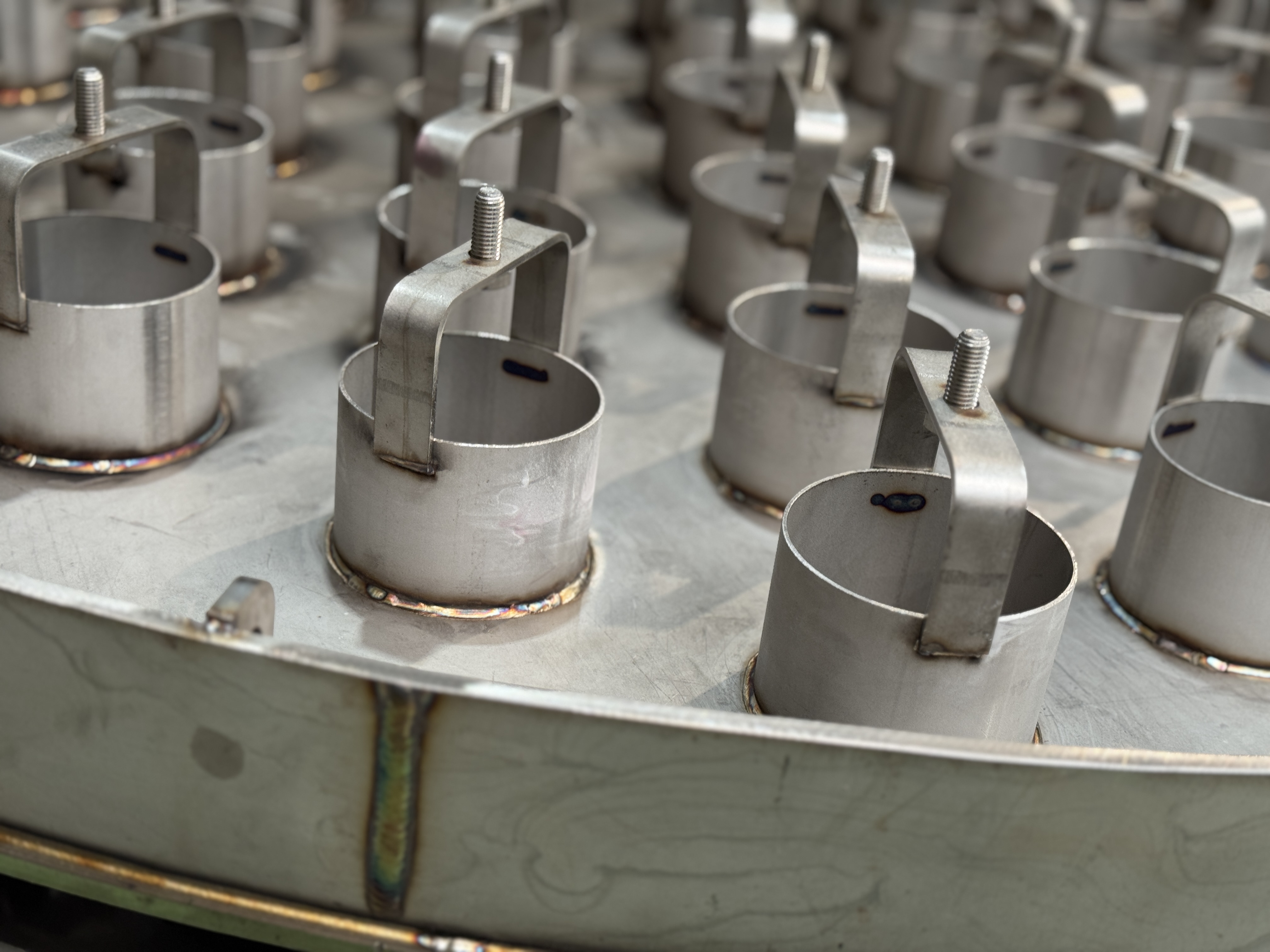
Bubble cap trays
These trays are used in certain columns and other process equipment manufactured by SAG to promote efficient contact between liquid and gas phases. They allow for better distribution and more intense mass transfer, particularly in distillation columns or similar equipment.
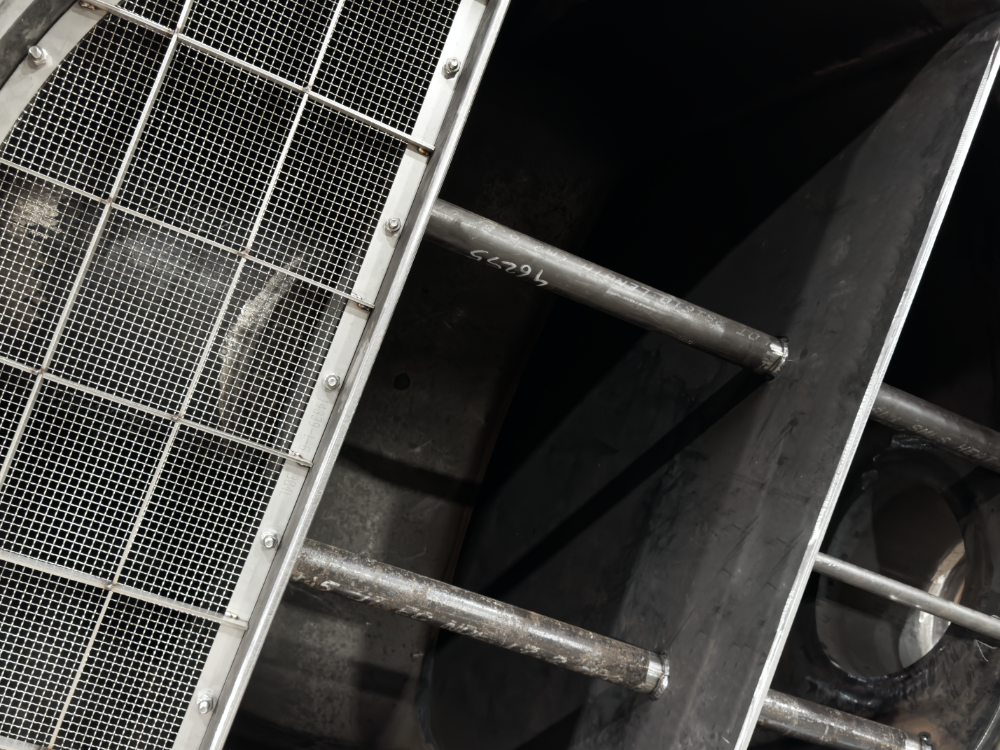
Demisters (mist eliminators)
Placed at the outlet of an exchange or treatment zone, they separate liquid droplets entrained in a gas flow, preventing liquid losses and contamination. They improve gas purity and protect downstream equipment.
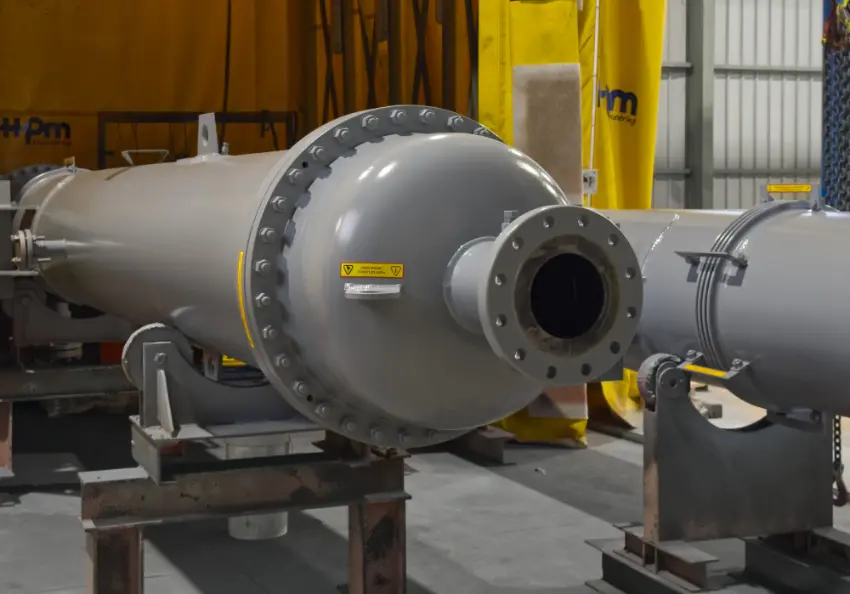
Internals serve several key functions in the shell and tube heat exchangers or process equipment you buy :
- They improve thermal performance by increasing turbulence without enlarging the equipment
- They reduce mechanical risks by limiting tube vibration and fatigue
- They facilitate maintenance by making certain areas more accessible or inspectable
- And they optimize the overall compactness of the exchanger by maximizing heat transfer efficiency within a reduced footprint.
4.6. Concrete examples of tubular heat exchanger configurations
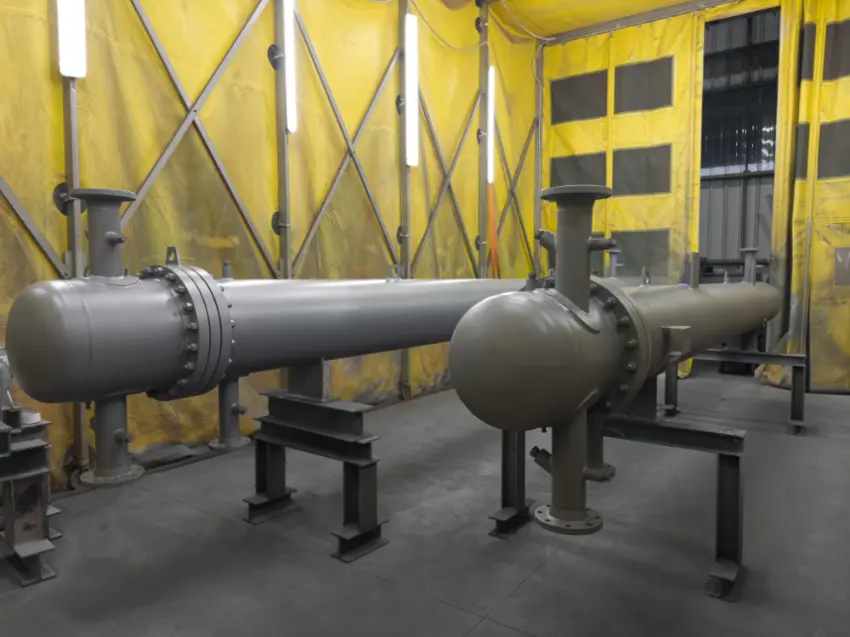
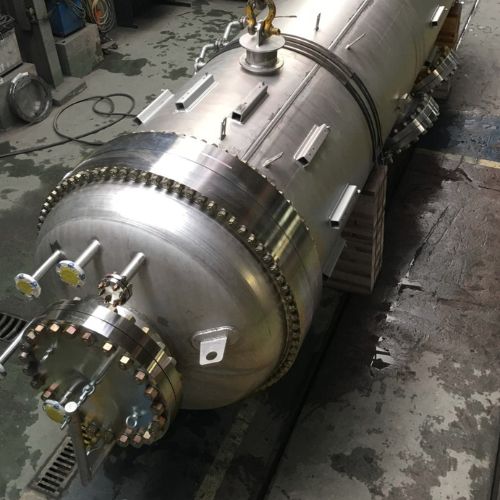
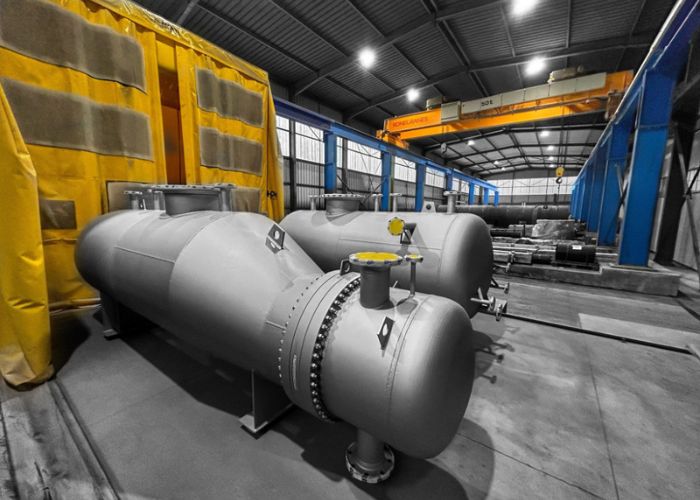
The heat exchangers in the pictures below are units manufactured by SAG for industrial, chemical, pharmaceutical or energy sectors. The description below them might not match exactly the actual unit represented in the picture for illustrative purposes.

Straight tubes with fixed tubesheets
For steam condensation, e.g. in the chemical industry. Straight tubes with fixed tubesheets are simple to manufacture and install. They suit low-fouling fluids when the temperature difference is moderate.
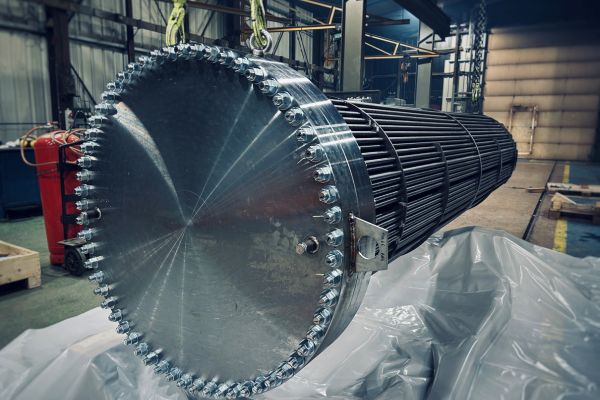
Removable (floating head) bundle with straight tubes
For cooling syrups or viscous fluids, e.g. in pharmaceuticals or food and beverage. The removable bundle allows mechanical cleaning (CIP) and offers great flexibility for inspection and maintenance.

U-tube bundle with transverse baffles and an integrated demister
For cooling high-temperature gases, e.g. in energy or oil & gas. U-tube bundles with baffles and an integrated demister optimize turbulence and droplet separation, while keeping the exchanger compact.
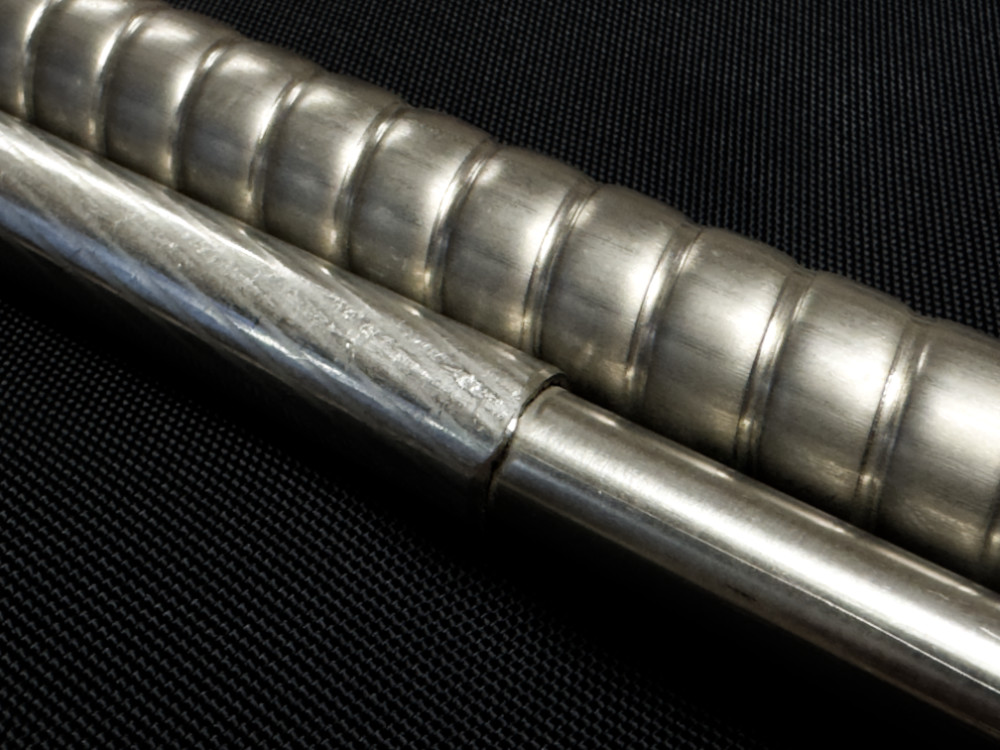
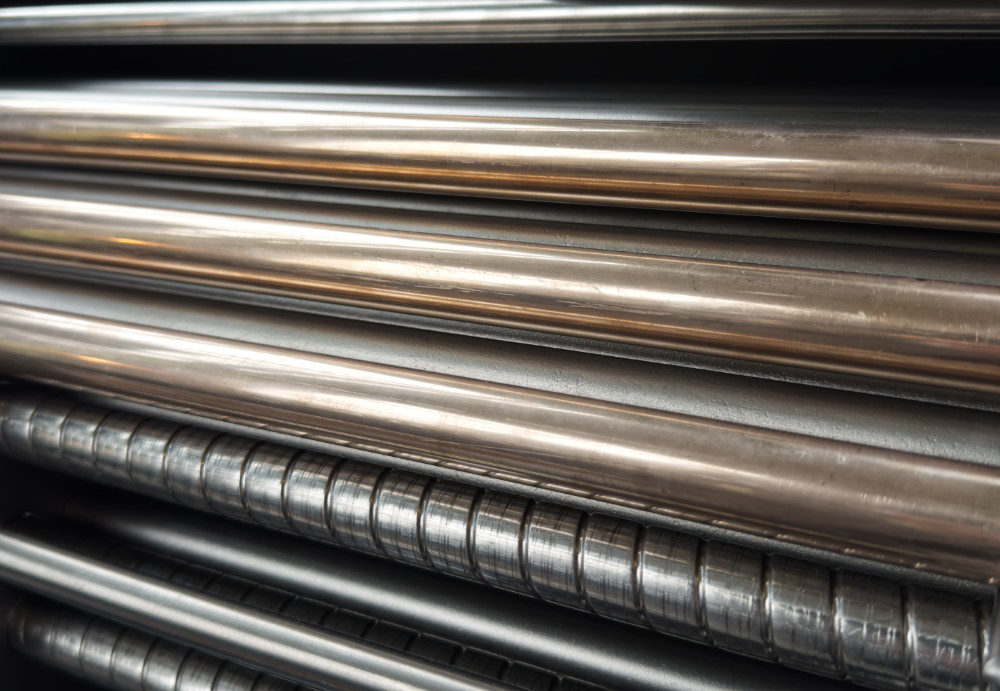
Corrugated tubes with internals (turbulators)
For viscous or low-conductivity fluids, e.g. in chemicals or food and beverage. Corrugated tubes equipped with internal turbulators significantly improve heat transfer. This configuration enhances performance without increasing the size of the exchanger.
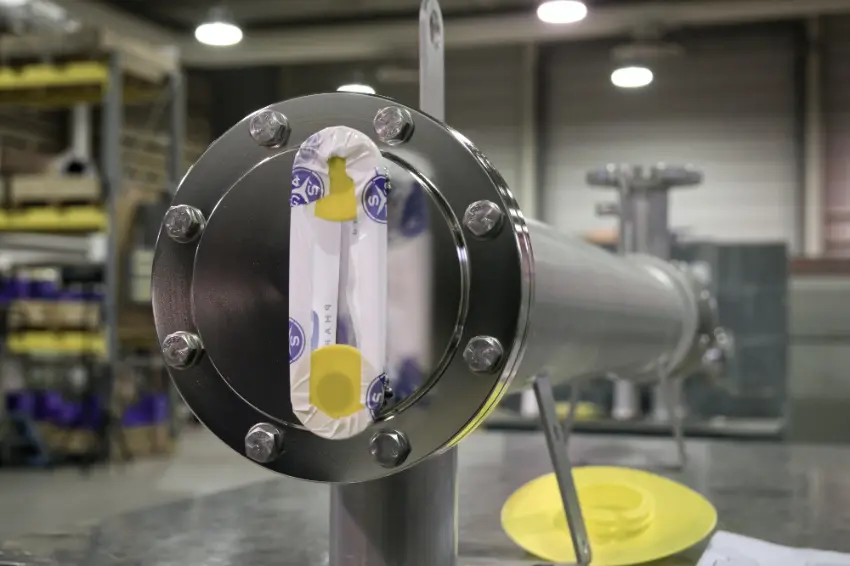
Straight tubes with controlled roughness
For applications with strict hygiene requirements, e.g. in pharma. Straight tubes with controlled roughness meet a precise roughness factor (Ra) to facilitate cleaning and limit fluid adhesion. This configuration ensures a process compliant with sanitary standards while remaining robust and durable.
4.7. Examples of shell and tube heat exchangers by application
Vacuum steam condensation process : vertical mounting, smooth tubes, co-current configuration to favor gravity-driven flow.
Cooling of a dirty fluid from a chemical reaction process : removable bundle with straight tubes, wide passages, and the option of mechanical cleaning.
Heat exchanger integrated into a mobile treatment skid : U-tube bundle, compact horizontal mounting, multiple tube passes to optimize surface area within a reduced footprint.
Cooling of high-temperature gases at the outlet of a reaction : horizontal mounting, straight bundle, transverse baffles to drive shell-side flow and maximize turbulence. Integration of a demister at the outlet to capture droplets before the downstream line. High-temperature alloy such as Incoloy 800H.
Compact exchanger for a slightly fouling fluid : multi-pass tubes with internal turbulators, segmental baffles on the shell side to optimize flow without creating dead zones. Horizontal skid-mounted assembly, with cleaning facilitated by chemical circulation (CIP).
5) SAG Industries, manufacturer of custom shell and tube heat exchangers
As you will have understood, the configuration of a custom shell and tube heat exchanger you need to buy depends above all on your process constraints: the nature of the fluids, the temperatures and pressures involved, the level of fouling, the cleaning or inspection requirements, and the on-site layout.
These parameters directly influence design choices: the type of bundle and shell, the orientation, the number of passes, the TEMA type, the thermal or mechanical internals, the specific interfaces, the materials to be used, and so on.
This is the very heart of our added value: at SAG, every heat exchanger is engineered to match your real operating conditions precisely. The right design is the one that maximizes thermal performance, reduces operating costs, and simplifies long-term maintenance.
Contact us !
Need to assess the best configuration for your application? Our teams are here to support you, from thermal sizing to design, manufacturing and finishing.
Click hereUsual questions related to that topic :
A custom shell and tube heat exchanger is a thermal piece of equipment specifically engineered to match a customer's process constraints: fluids, temperatures, pressures, footprint, and applicable standards. Unlike off-the-shelf equipment, every parameter (geometry, materials, configuration, internals) is sized to maximize performance for the target application.
The main codes used are ASME VIII Division 1 (American and international markets), EN 13445 (Europe), CODAP (France), and the TEMA standard, which is specific to shell and tube heat exchangers. Some projects require dual compliance, for example ASME and PED simultaneously.
The choice depends on the nature of the fluids (corrosive, viscous, loaded with solids), the operating temperatures and pressures, and regulatory requirements. Common materials range from carbon steel to nickel alloys (Incoloy, Hastelloy, Inconel), as well as titanium and clad solutions to optimize cost and resistance.
A fixed-tubesheet bundle is simple and cost-effective, suited to clean fluids and small temperature differentials. A U-tube bundle better absorbs thermal expansion and simplifies fabrication. A floating head (removable bundle) is preferred for fouling or corrosive fluids, as it allows full cleaning and inspection.
Yes. SAG Industries masters the main international codes (TEMA, ASME, EN 13445, CODAP, PED) and provides full documentary traceability for every piece of equipment. The engineering department uses industry-recognized tools (Aspen EDR, Inventor, AutoPIPE Vessel) to ensure both mechanical and thermal compliance.